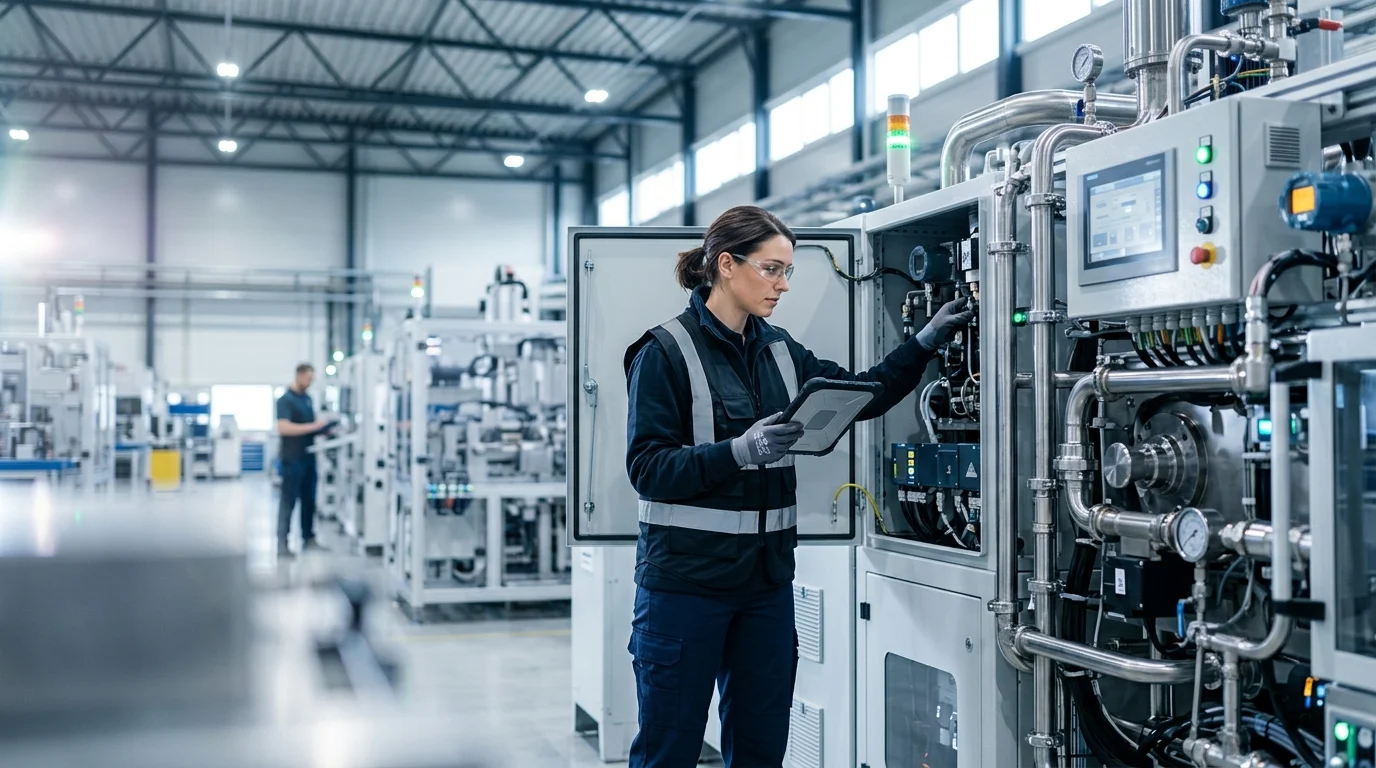
Smart Tech Automated Warehousing Boosts Energy Efficiency
From automated storage solutions to artificial intelligence (AI), modern warehouse technology helps businesses understand how energy is used throughout their facilities. These systems can adjust lighting, optimize equipment performance, and improve the movement of goods. The result is a warehouse that works more intelligently, reduces waste, and supports long-term sustainability goals.
Understanding Smart Tech Automated Warehousing Boosts Energy Efficiency
Smart warehousing combines automation, connected devices, data analytics, and intelligent software to improve daily operations. Instead of relying entirely on manual decisions, businesses can use real-time information to coordinate inventory, equipment, and energy consumption.
For example, automated storage and retrieval systems move products between designated locations with greater precision. Sensors monitor equipment activity, while warehouse management systems coordinate tasks to prevent unnecessary movement. These improvements can reduce wasted time and energy.
Smart technology also allows warehouse managers to identify inefficient processes. If a conveyor operates continuously despite low demand, monitoring software can reveal the problem. Managers can then adjust operating schedules or introduce automatic shutdown procedures.
The main objective is not simply to automate every task. It is to use technology strategically so that equipment operates when needed, resources are used effectively, and employees can complete work safely and efficiently.
How Automation Reduces Warehouse Energy Consumption
Automation can improve energy efficiency by coordinating warehouse activities and reducing unnecessary equipment operation. In traditional facilities, workers may spend considerable time searching for products, moving inventory between locations, or operating machinery without optimized schedules.
Automated systems help streamline these processes.
Intelligent Storage and Retrieval Systems
Automated storage and retrieval systems use machines, lifts, conveyors, and software to store and retrieve products. Their movements can be planned to reduce unnecessary travel and improve the use of available space.
When inventory is organized efficiently, products can be accessed with fewer movements. This can lower the energy required for handling goods, particularly in warehouses with high order volumes.
Compact storage systems may also reduce the need to expand a facility. A smaller or more efficiently arranged operational area can require less lighting, heating, and cooling, depending on the building design.
Automated Guided Vehicles and Mobile Robots
Automated guided vehicles and autonomous mobile robots transport products between different warehouse locations. They can follow optimized routes, respond to operational demands, and reduce unnecessary journeys.
Some systems can recharge during scheduled breaks or return to charging stations when their batteries reach predefined levels. Intelligent fleet management can also prevent several robots from completing overlapping tasks.
These benefits depend on suitable equipment, effective scheduling, and appropriate charging infrastructure. Businesses should assess actual electricity use rather than assume every automated vehicle consumes less energy than a conventional alternative.
Smart Lighting and Climate Control Improve Efficiency
Lighting and heating, ventilation, and air conditioning (HVAC) systems can account for a significant share of a warehouse’s energy consumption. Smart controls help businesses adjust these systems according to occupancy, temperature, working schedules, and operational requirements.
Motion Sensors and Intelligent Lighting
Traditional lighting often remains switched on throughout a shift, including in areas where employees rarely work. Motion sensors and occupancy controls can automatically reduce lighting in unused aisles and storage zones.
Daylight sensors can also adjust artificial lighting when natural light is available. In facilities with large windows or skylights, this approach can reduce unnecessary electricity use while maintaining suitable visibility.
However, lighting controls must be designed carefully. Emergency routes, active workstations, inspection areas, and safety-critical locations need appropriate illumination at all times.
AI-Powered Temperature Management
Smart climate control systems use temperature sensors, building data, and predictive software to regulate indoor conditions. They can adjust heating and cooling according to occupancy, weather conditions, and operational schedules.
For example, a warehouse with limited activity overnight may not require the same temperature settings as a busy daytime facility. Automated controls can make adjustments while maintaining the conditions required for stored products.
Cold-storage warehouses can benefit particularly from careful temperature monitoring because refrigeration may represent a substantial operating expense. Nevertheless, temperature settings must always comply with product safety, quality, and regulatory requirements.
The Role of Artificial Intelligence in Energy Optimization
Artificial intelligence makes warehouse energy management more responsive by analyzing large amounts of operational data. Instead of following fixed schedules alone, AI-powered systems can identify patterns and recommend adjustments based on changing conditions.
Predictive analytics can help managers estimate periods of high demand, recognize equipment inefficiencies, and plan maintenance before performance deteriorates.
For instance, software may identify that a particular conveyor consumes unusually high amounts of electricity during certain operating periods. A maintenance team can investigate whether friction, poor alignment, excessive loading, or another issue is responsible.
AI can also coordinate warehouse tasks to reduce idle time. By assigning work according to equipment availability, inventory locations, and delivery schedules, intelligent systems can help limit unnecessary movement.
However, AI recommendations are only as reliable as the information available to them. Accurate sensors, consistent data, appropriate system configuration, and human oversight remain essential for effective results.
Key Technologies That Support Energy-Efficient Warehousing
Several technologies can work together to improve warehouse performance. The most suitable combination depends on facility size, product requirements, existing infrastructure, and budget.
| Technology | Primary Function | Potential Energy Benefit |
|---|---|---|
| Warehouse management systems | Coordinate inventory and orders | Reduces unnecessary movement and operational delays |
| Smart lighting | Adjusts illumination automatically | Limits lighting in unused areas |
| IoT sensors | Monitor equipment and environmental conditions | Identifies waste and unusual consumption |
| Automated mobile robots | Transport products efficiently | Can reduce unnecessary travel |
| AI analytics | Identifies patterns and predicts demand | Supports better equipment scheduling |
| Smart HVAC controls | Regulates heating and cooling | Reduces avoidable climate-control demand |
| Predictive maintenance | Detects early signs of equipment problems | Helps maintain efficient operation |
These technologies are most effective when they share reliable information. For example, a warehouse management system can provide task schedules, while occupancy sensors and energy monitoring tools help determine when particular zones require lighting or climate control.
Why Data Monitoring Matters for Energy Savings
Technology alone does not guarantee lower energy consumption. Businesses need clear measurements to understand whether automation is delivering the expected benefits.
Energy monitoring systems collect information from meters, sensors, machinery, and building controls. Managers can use these measurements to compare electricity consumption across shifts, departments, and operational periods.
A useful approach is to establish a baseline before introducing new technology. This gives the business a reference point for measuring subsequent improvements.
Important performance indicators include:
-
Electricity consumed per order processed.
-
Peak electricity demand.
-
Equipment idle time.
-
Lighting and HVAC consumption.
-
Maintenance costs and equipment downtime.
Comparing energy consumption per order is often more meaningful than examining total electricity use alone. A warehouse may consume more electricity after automation because it processes substantially more orders. Measuring energy intensity helps reveal whether each order is being handled more efficiently.
Managers should also account for seasonal temperatures, operating hours, changes in product volume, and new equipment when comparing results.
Financial and Environmental Benefits for Businesses
Energy-efficient warehousing can provide both financial and environmental advantages. Lower electricity consumption may reduce operating expenses, while improved equipment coordination can support higher productivity.
Automated systems can also help businesses make better use of existing warehouse space. More efficient storage arrangements may delay the need for additional facilities, although the benefits depend on the type of operation and its growth requirements.
The following table illustrates how businesses can assess possible improvements. The figures are examples of performance measures, not guaranteed savings.
| Business Area | Measurement | Desired Outcome |
|---|---|---|
| Electricity consumption | kWh per order | Lower energy intensity |
| Equipment operation | Idle hours per shift | Fewer unnecessary operating hours |
| Lighting | kWh per square metre | More efficient illumination |
| Climate control | HVAC electricity consumption | Reduced avoidable demand |
| Maintenance | Unplanned downtime | More reliable equipment |
| Inventory handling | Travel distance per order | Less unnecessary movement |
Environmental benefits may include lower indirect greenhouse gas emissions when electricity consumption decreases. The size of this reduction depends on the electricity source and the facility’s energy requirements.
Businesses can strengthen these benefits by combining automation with renewable electricity, efficient building insulation, responsible equipment purchasing, and regular performance reviews.
Challenges of Implementing Smart Warehouse Technology
Although smart automation offers significant opportunities, implementation requires careful planning. High initial costs can make advanced robotics, connected sensors, and software upgrades difficult for smaller businesses.
Integration is another concern. Older equipment may not communicate easily with modern management platforms, potentially requiring additional hardware, software development, or infrastructure improvements.
Employee training is equally important. Workers need to understand new procedures, interpret system alerts, and respond appropriately when automated equipment encounters problems.
Cybersecurity must also be considered. Connected warehouse systems can create additional risks if access controls, software updates, and network security are neglected.
Businesses should evaluate the full lifecycle cost of an investment, including installation, maintenance, training, software subscriptions, and electricity consumption. A technology that appears efficient in isolation may deliver limited savings if it is poorly matched to the facility’s needs.
A phased implementation can reduce these risks. Companies may begin with energy monitoring or smart lighting, measure the results, and then expand to robotics or AI-based optimization when the business case is clear.
Best Practices for Building an Energy-Efficient Warehouse
A successful strategy starts with understanding existing operations. Managers should review utility bills, equipment schedules, lighting systems, and warehouse workflows before deciding which technologies to introduce.
The following practices can support a more effective transition:
Start with an energy audit. Identify the equipment and processes that consume the most electricity. Prioritize areas where measurable improvements are achievable.
Choose technology based on operational needs. High-volume distribution centres may benefit from robotics, while smaller facilities may achieve useful results through sensors, efficient lighting, and improved scheduling.
Set measurable targets. Establish goals for energy consumption per order, equipment downtime, or peak demand. Review progress regularly.
Maintain equipment properly. Clean, inspect, and service machinery according to manufacturer recommendations. Well-maintained systems are less likely to operate inefficiently.
Train employees. Explain how new systems work and encourage staff to report unusual equipment behaviour or unnecessary energy use.
Review results continuously. Compare performance against the baseline and adjust operating procedures when results fall short of expectations.
These steps help ensure that technology supports a broader operational strategy rather than becoming an expensive collection of disconnected systems.
The Future of Smart Automated Warehousing
smart warehouse technology,
The future of warehousing will likely involve greater coordination between robotics, AI, connected sensors, and energy management platforms. As these technologies develop, businesses may gain better visibility into electricity demand and more precise control over equipment operation.
Digital twins, which create virtual representations of physical facilities, can help managers evaluate proposed changes before implementing them in real environments. Simulation tools may reveal how different storage layouts, robot routes, or operating schedules could affect energy consumption.
Renewable energy integration and battery storage may also become increasingly important. Warehouses with suitable rooftop space could combine solar generation with intelligent charging schedules to make better use of locally produced electricity.
Even so, successful innovation will depend on practical results. Businesses should prioritize reliable systems, employee safety, maintainability, and measurable energy performance over automation for its own sake.
Conclusion
Smart Tech Automated Warehousing Boosts Energy Efficiency by connecting intelligent software, automated equipment, and real-time monitoring to reduce unnecessary resource consumption. From smart lighting and climate control to robotics and predictive maintenance, these solutions can help warehouses improve productivity while managing operating expenses.
The most effective strategy combines suitable technology with accurate measurements, employee training, and ongoing evaluation. Rather than automating every process immediately, businesses should identify their largest sources of waste and invest in improvements that deliver measurable value.
As supply chains become more demanding, energy-efficient warehousing can help companies build more resilient operations, use resources responsibly, and prepare for future business needs.
editor's pick
latest video

news via inbox
Nulla turp dis cursus. Integer liberos euismod pretium faucibua