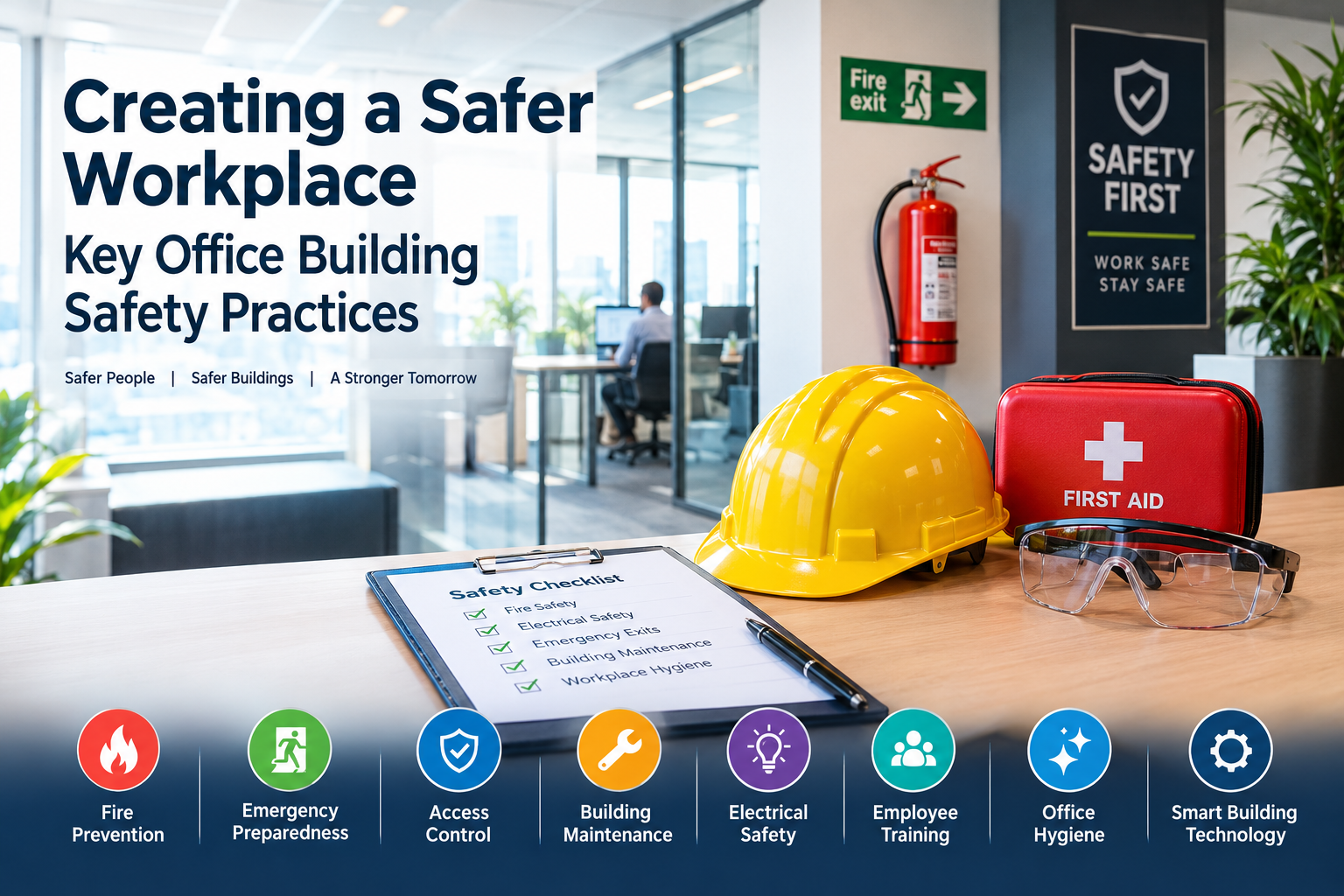
Creating a Safer Workplace: Key Office Building Safety Practices
Creating a Safer Workplace: Smarter Building Safety Tips
Introduction
Creating a safe and comfortable office environment is essential for every business. Employees perform better when they feel protected, visitors trust organisations .That maintain professional facilities, and employers can reduce unnecessary risks by following effective safety procedures. Creating a Safer Workplace: Key Office Building Safety Practices involves more than installing security cameras or placing fire extinguishers in corridors. It requires a complete approach that combines regular inspections, emergency planning, access control, employee awareness, and proper building maintenance.
Modern offices contain electrical equipment, computer systems, meeting rooms, stairways, elevators, and shared facilities. Each area can present different hazards if it is not managed correctly. Businesses should therefore establish practical safety policies that address everyday risks while preparing staff for unexpected situations. By using clear procedures, suitable technology, and regular training, organisations can create a workplace where employees can concentrate on their responsibilities with greater confidence.
Understanding the Importance of Office Building Safety
Office safety protects people, property, and business operations. A poorly maintained building may expose employees to hazards such as slippery floors, faulty wiring, blocked emergency exits, or inadequate ventilation. Even minor problems can lead to injuries, disruption, and additional expenses when they remain unnoticed.
A proactive approach helps organisations identify problems before they become serious. Building managers should inspect common areas, review incident reports, and encourage employees to report unsafe conditions. These actions make safety a shared responsibility rather than a task assigned exclusively to management.
Businesses should also understand the workplace safety requirements that apply to their location. Regulations differ between the United States and the United Kingdom, so employers need to consult the relevant authorities and qualified professionals when developing their policies.
Conduct Regular Building Safety Inspections
Routine inspections are among the most effective ways to maintain a safe office. Managers should establish a schedule for checking entrances, corridors, staircases, electrical installations, lighting, and shared workspaces. Inspections should also cover less visible areas, including storage rooms, utility spaces, and plant rooms.
Employees should have a straightforward way to report hazards. A digital reporting system, maintenance request form, or designated safety contact can help ensure that concerns reach the appropriate person quickly.
Inspection records should include the date, location, identified problem, corrective action, and completion status. This documentation makes it easier to identify recurring issues and confirm that repairs have been completed.
Improve Fire Prevention and Emergency Preparedness
Fire prevention must be a central part of office safety planning. Employers should ensure that suitable fire detection and alarm systems are maintained according to applicable requirements. Fire extinguishers and other emergency equipment should remain accessible and receive professional servicing when required.
Emergency exits must be clearly marked, unlocked when necessary for evacuation, and free from stored materials. Employees should know the nearest safe exit, the designated assembly point, and the procedures for assisting visitors during an emergency.
Regular evacuation drills help staff understand their responsibilities before an actual incident occurs. Businesses should also prepare plans for employees who may need assistance evacuating and appoint trained personnel where appropriate.
Emergency contact information and evacuation instructions should be easy to find. Building managers must review these arrangements whenever office layouts, occupancy levels, or access routes change.
Strengthen Access Control and Building Security
A secure office building helps protect employees, visitors, equipment, and confidential information. Access control systems can include electronic entry cards, visitor registration, reception procedures, and appropriately positioned security cameras.
Businesses should ensure that access permissions match employees’ responsibilities. Lost entry cards should be reported promptly, while former employees’ access should be removed when their employment ends. Visitors should follow a consistent check-in process and receive clear instructions about restricted areas.
Security measures must also respect privacy and applicable data protection laws. Camera placement, monitoring practices, and visitor records should serve legitimate safety purposes without collecting unnecessary personal information.
Good security depends on people as well as technology. Employees should avoid allowing unknown individuals to enter restricted areas without proper authorisation and should report suspicious activity through established procedures.
Maintain Electrical Systems and Office Equipment
Electrical hazards can develop when equipment is damaged, overloaded, or poorly maintained. Frayed cables, loose sockets, overheating devices, and overloaded extension leads should be addressed promptly by competent personnel.
Office managers should arrange appropriate inspections and maintenance based on the building’s needs, equipment condition, and applicable legal requirements. Employees should receive clear instructions about reporting electrical faults and avoiding unauthorised repairs.
Computers, printers, kitchen appliances, and charging stations should be positioned and used according to manufacturer guidance. Cables should not obstruct walkways or create tripping hazards.
The following table summarises several important areas for routine checks.
| Safety area | What to inspect | Recommended action |
|---|---|---|
| Fire protection | Alarms, extinguishers, exits | Test and maintain equipment according to requirements |
| Electrical systems | Cables, sockets, equipment | Report damage and arrange competent repairs |
| Walkways | Floors, stairs, corridors | Remove obstructions and address slip hazards |
| Building security | Entry points, access cards | Review permissions and visitor procedures |
| Indoor environment | Ventilation, temperature, lighting | Investigate problems and maintain suitable conditions |
These checks should form part of a documented maintenance programme. The inspection frequency should reflect risk, equipment instructions, and applicable regulations rather than relying on a single schedule for every building.
Promote Cleanliness and Good Workplace Hygiene
Clean, organised facilities support employee health and reduce avoidable accidents. Spills should be cleaned promptly, damaged flooring should be reported, and corridors should remain clear of boxes, furniture, and loose cables.
Shared kitchens, washrooms, meeting rooms, and frequently touched surfaces require appropriate cleaning arrangements. Waste should be removed regularly, while cleaning products must be stored safely and used according to their labels.
Ventilation is another important consideration. Employers should investigate persistent odours, excessive indoor humidity, unusual temperature changes, or reports of poor air quality. Qualified building professionals can assess ventilation systems and recommend improvements where necessary.
A clean workplace also depends on employee participation. Clear expectations and accessible reporting channels help everyone contribute to a healthier office environment.
Improve Lighting, Ergonomics, and Indoor Comfort
Lighting and workstation design influence comfort, concentration, and day-to-day safety. Poor lighting can make obstacles difficult to notice, while unsuitable desk arrangements may contribute to discomfort during extended computer use.
Employers should provide adequate lighting in work areas, corridors, staircases, and entrances. Adjustable chairs, suitable monitor positioning, and appropriately arranged keyboards can help employees maintain comfortable working postures.
Employees should be encouraged to adjust their workstations to their needs and take regular movement breaks where practical. Shared workstations should be arranged so that equipment can be used comfortably by different people.
Temperature and noise also affect the working environment. Managers should respond to reasonable concerns and assess whether changes to ventilation, equipment placement, or workspace arrangements are necessary.
Provide Practical Employee Safety Training
Safety policies are effective only when employees understand how to follow them. Training should explain emergency procedures, hazard reporting, security expectations, safe equipment use, and the correct response to common workplace incidents.
New employees should receive an introduction to building procedures, including emergency exits and assembly points. Existing staff should receive refresher training when policies change or inspections reveal knowledge gaps.
Short training sessions, demonstrations, and practice exercises can make safety information easier to remember. Managers should also ensure that contractors and temporary workers receive relevant instructions before beginning work.
Employees should feel comfortable raising concerns without fear of unfair treatment. When management responds constructively, staff members are more likely to report problems before they affect others.
Use Technology to Support Building Safety
Technology can help organisations monitor building conditions and organise maintenance. Smart sensors may detect unusual temperatures, water leaks, or changes in indoor air conditions. Digital maintenance platforms can assign repair tasks, record inspection results, and send reminders when equipment requires attention.
Electronic access systems can improve control over restricted areas, while emergency notification tools can distribute instructions quickly. However, these technologies must be configured correctly and maintained to remain dependable.
Technology should support, not replace, professional judgement. Sensors may fail, alerts may be missed, and digital records may become outdated. Businesses should therefore maintain backup procedures, verify important warnings, and ensure that staff know how to respond if a system becomes unavailable.
Develop a Clear Safety Management Plan
An effective safety programme needs clear responsibilities and measurable objectives. Building owners, facilities managers, supervisors, contractors, and employees should understand their respective duties.
A written plan should explain how hazards are identified, who approves repairs, how emergencies are managed, and when policies are reviewed. Incident reports should be examined for patterns that may indicate an underlying problem.
The following table provides a practical overview of common responsibilities.
| Responsible person | Main responsibility | Example |
|---|---|---|
| Building manager | Coordinate inspections and maintenance | Arrange repairs to damaged stairways |
| Safety coordinator | Support risk assessments and training | Organise evacuation exercises |
| Employees | Follow procedures and report hazards | Notify management about blocked exits |
| Security personnel | Manage authorised access | Follow visitor registration procedures |
| Contractors | Complete assigned work safely | Follow site rules during maintenance |
Responsibilities should be adapted to the organisation’s size, building arrangements, and legal obligations. Small offices may assign several duties to one qualified person, while larger facilities may require a dedicated safety team.
Measure Progress and Review Safety Procedures
Workplace safety improves when organisations review their results rather than assuming that existing procedures are sufficient. Useful indicators include the number of reported hazards, time taken to complete repairs, inspection completion rates, and employee participation in training.
Incident reports should be reviewed to identify contributing factors and opportunities for improvement. A rise in reported hazards does not always mean conditions are worsening; it may indicate that employees have become more confident about reporting concerns.
Safety plans should be reviewed after significant incidents, building renovations, changes in occupancy, or updates to applicable requirements. Regular consultation with employees can also reveal practical problems that formal inspections might overlook.
Conclusion
Creating a safer office requires consistent attention to building maintenance, emergency preparedness, security, hygiene, employee training, and workplace comfort. Businesses can reduce avoidable risks by conducting regular inspections, correcting hazards promptly, maintaining emergency equipment, and giving employees clear instructions.
Technology can improve monitoring and recordkeeping, but it works best when combined with competent professionals and responsible management. Every organisation should establish procedures that reflect its building, workforce, and legal responsibilities.
Ultimately, Creating a Safer Workplace: Key Office Building Safety Practices is an ongoing commitment rather than a one-time project. By reviewing procedures, encouraging employee participation, and investing in preventive maintenance, organisations can build a safer environment that supports staff wellbeing and more reliable business operations.
Meta Description
editor's pick
latest video

news via inbox
Nulla turp dis cursus. Integer liberos euismod pretium faucibua