
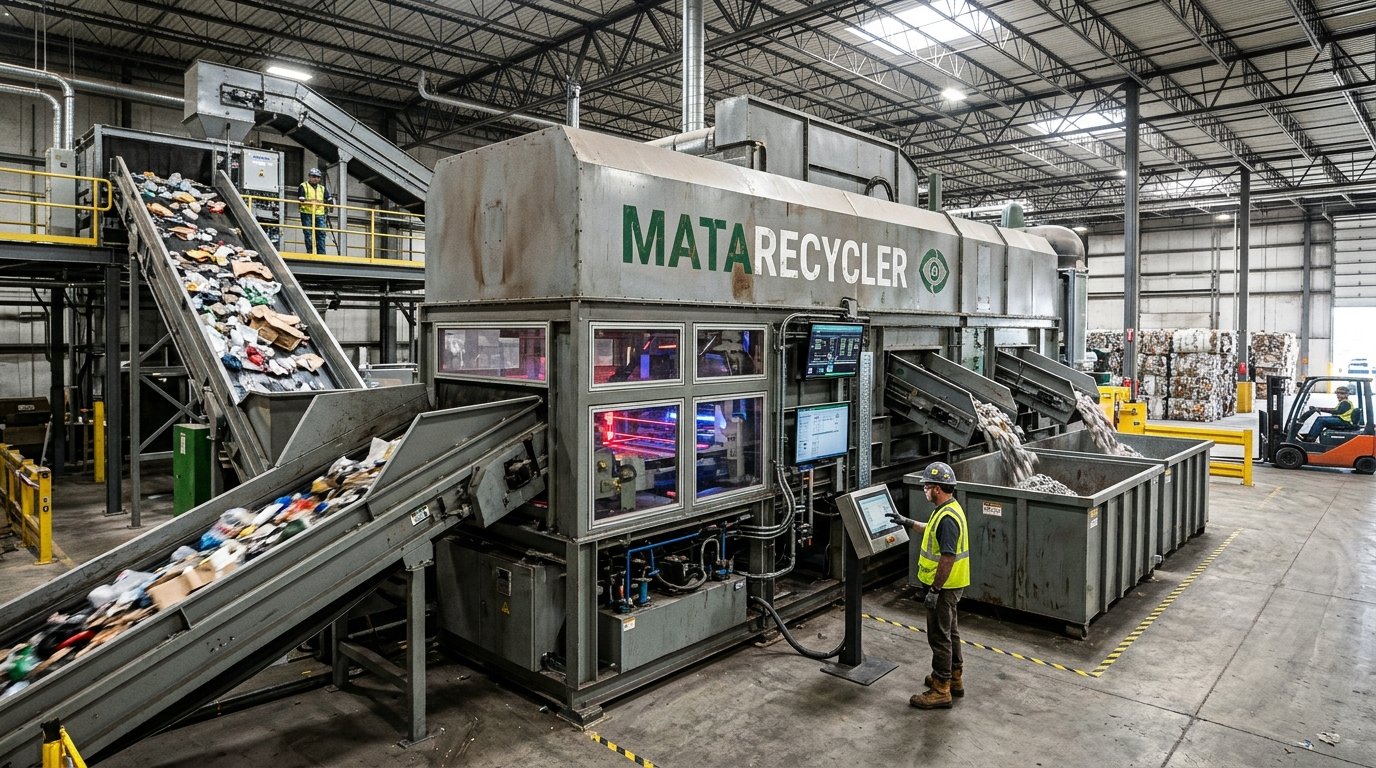
matarecyclerX
The growing focus on recycling reflects a larger shift toward environmental responsibility. Instead of treating discarded materials as useless products, modern waste management encourages people to recover valuable resources and reuse them whenever possible. Better recycling practices can reduce pollution, conserve natural resources, and support a more sustainable economy. Understanding how innovative recycling approaches can improve waste management is essential for building cleaner communities and protecting the environment.
Understanding the Role of Matarecycler in Modern Waste Management
Modern waste management involves much more than collecting rubbish and transporting it to landfills. It includes sorting, recycling, processing, resource recovery, and responsible disposal. These activities work together to reduce the environmental impact of everyday waste.
Matarecycler can be discussed as part of this wider movement toward smarter recycling and responsible waste handling. Its relevance comes from the increasing demand for systems that encourage material recovery, improve recycling awareness, and support sustainable practices.
One of the biggest problems with traditional waste management is that recyclable materials often become mixed with general rubbish. When paper, plastics, metals, and other materials are not separated properly, recovering them becomes more difficult.
Improved recycling practices can help address this problem by encouraging better sorting habits and more efficient material collection.
Why Matarecycler Is Transforming Waste Management Practices
The transformation of waste management depends on several important developments. Recycling awareness, responsible consumption, better sorting systems, and resource recovery all contribute to meaningful environmental improvements.
Matarecycler represents an opportunity to explore how these ideas fit into the future of recycling. The following factors explain why modern recycling approaches are becoming increasingly important.
1. Encouraging Better Recycling Habits
Recycling begins with everyday decisions. People who understand which materials can be recycled are more likely to separate waste correctly and reduce unnecessary disposal.
Educational campaigns and accessible recycling information can make these habits easier to develop. Households can separate paper, cardboard, glass, metal, and suitable plastics instead of placing everything into one waste container.
Businesses can also introduce recycling policies that encourage employees to handle materials responsibly.
Better recycling habits provide several advantages:
-
Less recyclable material entering landfills.
-
Greater awareness of environmental responsibility.
-
Improved separation of reusable materials.
-
More opportunities for resource recovery.
These small actions can create meaningful improvements when adopted across entire communities.
2. Supporting Sustainable Resource Recovery
Many materials thrown away every day still have economic and environmental value. Metals, paper, glass, and certain plastics can be processed and used again in manufacturing.
Resource recovery helps reduce the demand for newly extracted raw materials. For example, recycling aluminium can reduce the need for producing new aluminium from mineral resources. Recycled paper can also reduce demand for virgin wood pulp.
Matarecycler fits into discussions about this resource-focused approach because sustainable waste management depends on recognizing the value of discarded materials.
The following table illustrates how common recyclable materials can support resource recovery.
| Material | Recycling Opportunity | Environmental Benefit |
|---|---|---|
| Paper | Reprocessed into paper products | Reduces demand for virgin pulp |
| Glass | Made into new glass products | Conserves raw materials |
| Aluminium | Reused in manufacturing | Reduces energy requirements |
| Plastic | Processed into suitable new products | Reduces demand for virgin plastic |
| Cardboard | Converted into packaging | Supports material reuse |
The actual benefits depend on local recycling facilities, material quality, and processing methods.
3. Reducing Pressure on Landfills
Landfills remain a major part of waste disposal systems in many countries. However, increasing waste volumes create challenges for local authorities and environmental planners.
When recyclable materials are separated and recovered, less waste needs to be sent for disposal. This can help extend landfill capacity and reduce the environmental pressure associated with waste accumulation.
Organic materials also deserve attention. Food scraps and garden waste can often be processed through composting facilities instead of being mixed with general rubbish.
Matarecycler highlights the importance of considering alternatives to traditional disposal methods. A balanced waste management strategy should prioritize waste prevention, reuse, recycling, and responsible disposal.
The Importance of Technology in Modern Recycling
Technology is changing how waste management organizations collect, sort, monitor, and process materials. Modern equipment and digital systems can improve operational efficiency and help recycling facilities manage increasing waste volumes.
Automated sorting equipment, for example, can identify different materials and separate them for further processing. Optical sensors may recognize specific types of plastic, while magnetic separation systems can help recover certain metals.
Digital tracking systems can also help organizations monitor collection activities and understand how much material is being recovered.
These developments make recycling operations more organized and provide useful information for future planning.
How Matarecycler Connects With Smarter Recycling Solutions
The discussion around matarecycler can also highlight the growing importance of combining environmental awareness with modern recycling practices.
Smarter recycling solutions focus on making material recovery more efficient and accessible. Rather than depending entirely on manual sorting and traditional disposal methods, organizations can explore improved collection systems, better education, and suitable processing technologies.
However, technology alone cannot solve every waste management problem. Successful recycling still depends on public participation, appropriate infrastructure, responsible manufacturing, and effective waste policies.
Economic Benefits of Better Waste Management
Recycling is not only an environmental activity. It can also contribute to economic development by creating opportunities across collection, transportation, processing, and manufacturing industries.
When recyclable materials are recovered, they may become valuable inputs for other production processes. This supports businesses that manufacture products using recycled materials.
The recycling industry can also create employment opportunities in areas such as waste collection, sorting, equipment maintenance, environmental consulting, and materials processing.
The economic advantages can include:
-
Lower demand for some virgin raw materials.
-
New opportunities for recycling businesses.
-
Employment in waste processing and recovery.
-
Improved efficiency in material management.
-
Opportunities for sustainable product development.
The financial benefits vary depending on market demand, transportation costs, processing expenses, and the quality of recovered materials.
How Businesses Can Adopt Better Recycling Strategies
Businesses produce different types of waste depending on their industries. Offices generate paper and packaging waste, manufacturing facilities produce industrial materials, and retail businesses often handle large quantities of cardboard and plastic packaging.
A practical recycling strategy begins with understanding what a business throws away.
Companies can conduct waste assessments to identify recyclable materials and areas where unnecessary waste can be reduced.
They can then introduce clearly labelled collection containers, train employees, and work with suitable recycling providers.
The following table provides a simple comparison of common business waste management practices.
| Business Activity | Recommended Practice | Expected Result |
|---|---|---|
| Office operations | Separate paper and cardboard | Better material recovery |
| Retail operations | Recycle suitable packaging | Less general waste |
| Manufacturing | Recover usable industrial materials | Improved resource efficiency |
| Food services | Compost suitable organic waste | Reduced organic disposal |
| Warehousing | Reuse transport packaging | Lower packaging consumption |
Matarecycler can serve as a useful topic when discussing the importance of these practical improvements and the wider movement toward responsible business operations.
Environmental Challenges That Recycling Must Address
Although recycling offers important benefits, it is not a perfect solution. Different materials require different processing methods, and some products are difficult or expensive to recycle.
Contamination is one of the most common challenges. Food residue, mixed materials, and unsuitable items can reduce the quality of recyclable waste.
Another challenge is limited infrastructure. Some communities have access to advanced recycling facilities, while others depend on basic collection and disposal services.
Transportation can also affect the overall environmental performance of recycling programs. Collecting and processing materials requires energy, equipment, and resources.
For this reason, effective waste management requires realistic planning rather than assuming that every discarded product can be recycled.
The Future of Matarecycler and Sustainable Waste Management
The future of waste management will likely involve a combination of better recycling infrastructure, public education, responsible manufacturing, and technological development.
Governments and businesses are increasingly recognizing that waste prevention should receive as much attention as recycling itself.
Manufacturers can contribute by designing products that last longer, use fewer materials, and are easier to repair or recycle. Consumers can support these efforts by choosing durable products, reusing suitable items, and following local recycling guidelines.
Matarecycler provides a relevant subject for exploring these changes and understanding why modern recycling practices matter.
Future developments may include improved automated sorting, more effective material recovery, better waste collection systems, and increased use of recycled materials in manufacturing.
The most successful solutions will be those that combine technological progress with practical environmental responsibility.
Conclusion
Waste management is evolving as communities and businesses search for more sustainable ways to handle increasing amounts of waste. Recycling, resource recovery, responsible consumption, and improved collection systems are becoming essential parts of this transformation.
Matarecycler is a useful topic for examining the broader movement toward smarter recycling and more responsible waste management. By encouraging better recycling habits, reducing landfill pressure, supporting resource recovery, and exploring modern technologies, society can make meaningful progress toward environmental sustainability.
However, lasting improvement requires cooperation. Individuals, businesses, recycling organizations, and governments all have important roles to play. Recycling should be supported by waste prevention, reuse, proper sorting, and responsible disposal.
Ultimately, a cleaner future depends on treating waste as a resource whenever possible and making sustainability part of everyday decisions.
editor's pick
latest video

news via inbox
Nulla turp dis cursus. Integer liberos euismod pretium faucibua